Run cnspec as a service
Configure cnspec to run as a system service that automatically scans hosts and reports results to Mondoo Platform.
This document covers how to run cnspec as a service on hosts in your environment.
Configure cnspec to run as a service
When configured as a service, cnspec continuously assesses hosts by running policies configured in Mondoo Platform. By default, every 60 minutes, cnspec service:
-
Connects to your account in the platform
-
Retrieves and validates the latest policies enabled for it.
-
Scans the host.
-
Reports scan results back to the platform.
The installation places a systemd unit file at /etc/systemd/system/cnspec.service. However, it does not register or enable the service.
Before starting cnspec as a service, you should have already registered the host with your Mondoo Platform account.
Enable and start cnspec as a service
sudo systemctl daemon-reloadsudo systemctl enable cnspecsudo systemctl start cnspecsudo systemctl status cnspeccnspec service logging
cnspec service writes log events to the system logs. You can use this command to tail cnspec service logs on Linux hosts:
sudo journalctl -u cnspec -fThe default log level is info, but can be configured as defined in cnspec configuration options below.
When installed on Windows, the mondoo package automatically registers with the Service Control Manager in Windows, but sets the default Startup Type to Manual and does not start the service.

Running as a service
Launch a PowerShell terminal as an administrator and run these commands:
Before starting cnspec as a service, you should have already registered the host with your Mondoo Platform account.
Set-Service -Name mondoo -StartupType AutomaticSet-Service -Name mondoo -Status RunningGet-Service mondoo | Select-Object -Property Name, StartType, Status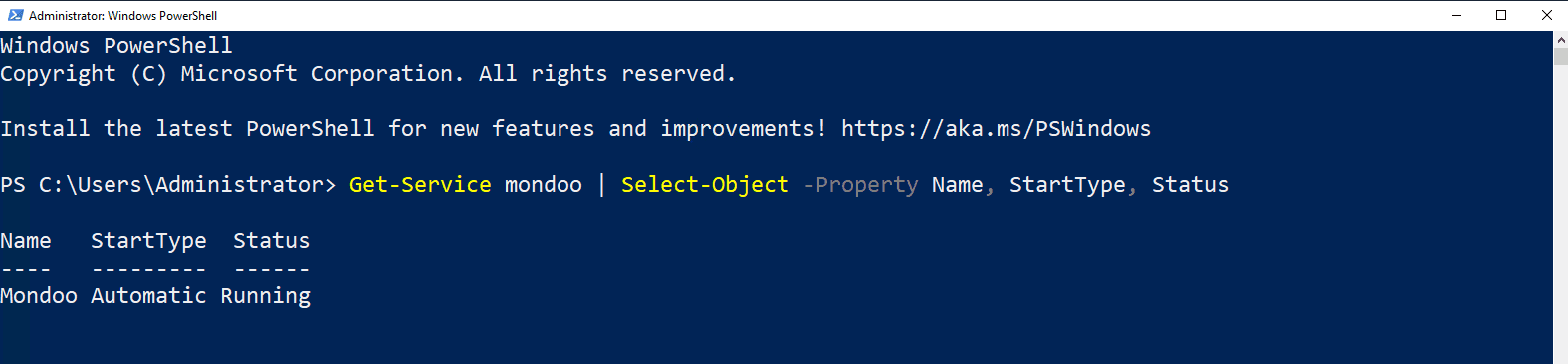
Mondoo service logging
Mondoo service writes logging events to the Windows Event Viewer Application logs. To view logs:
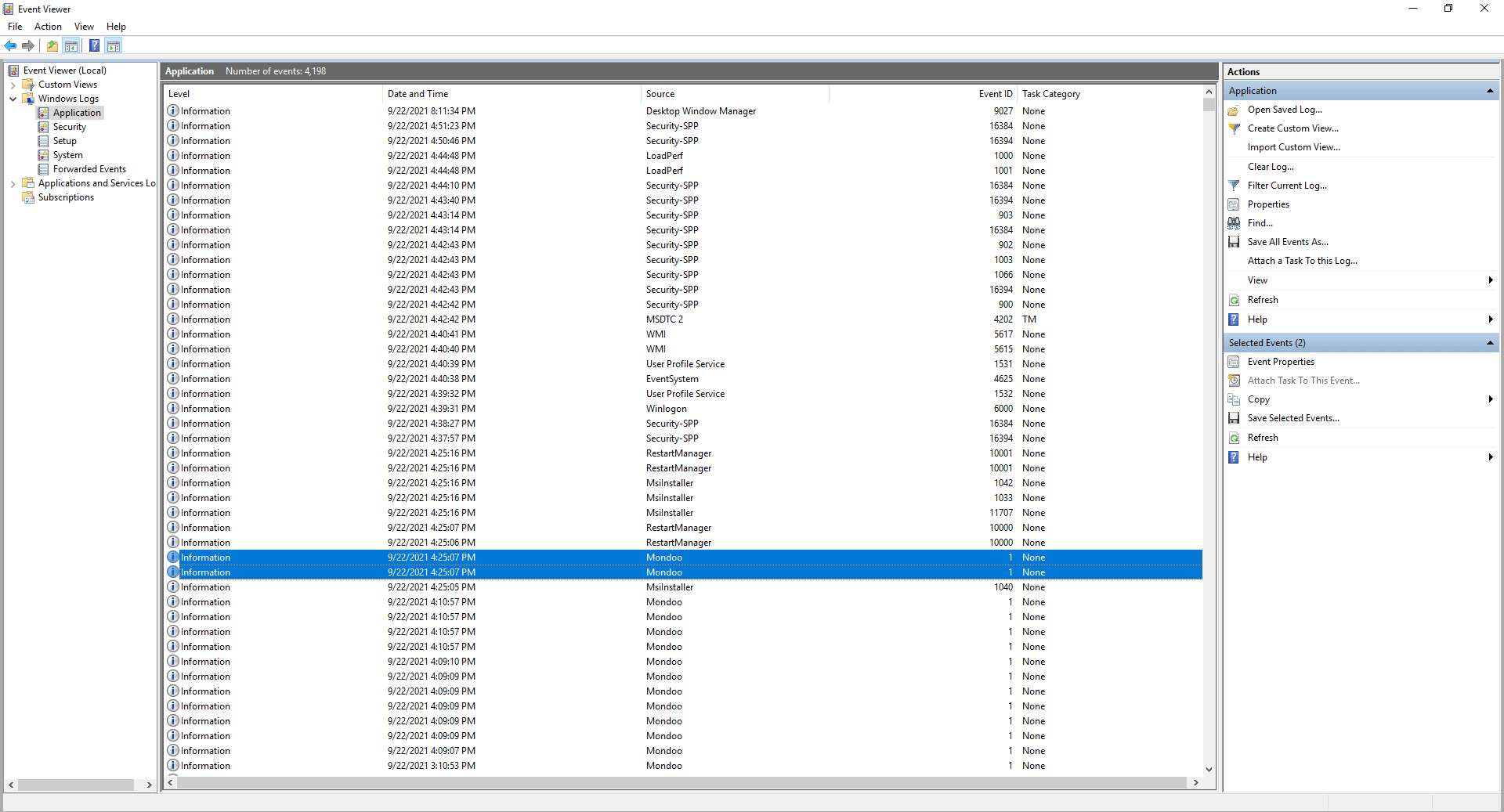
- Select the Start Menu and launch Event Viewer
- Expand Windows Logs
- Select Application to view application logs
- Use Find... to search for "cnspec"
If you installed cnspec using the PKG installer, a launchd service is created automatically. If you installed cnspec using Homebrew, you can manually create the service plist file at /Library/LaunchDaemons/com.mondoo.client.plist:
<?xml version="1.0" encoding="UTF-8"?>
<!DOCTYPE plist PUBLIC "-//Apple//DTD PLIST 1.0//EN" "http://www.apple.com/DTDs/PropertyList-1.0.dtd">
<plist version="1.0">
<dict>
	<key>Label</key>
	<string>com.mondoo.client</string>
	<key>ProgramArguments</key>
	<array>
		<string>/path/to/cnspec</string>
		<string>serve</string>
		<string>-t</string>
		<string>60</string>
		<string>--config</string>
		<string>/etc/opt/mondoo/mondoo.yml</string>
	</array>
	<key>RunAtLoad</key>
	<true/>
</dict>
</plist>
You must replace "/path/to/cnspec" with the path to cnspec on your host. You can validate this by opening a terminal and running which cnspec. Also, ensure you specify the correct path to Mondoo Platform config ("/etc/opt/mondoo/mondoo.yml" in the example above), which can be validated by opening a terminal and running cnspec status. Additionally, you can adjust the scan frequency (60 minutes by default).
sudo launchctl load /Library/LaunchDaemons/com.mondoo.client.plistTo start, stop or check the status of the service, use the launchctl tool:
$ sudo launchctl start com.mondoo.client
$ sudo launchctl list | grep cnspec
-	1	com.mondoo.client
cnspec serve
In addition to leveraging the platform service management system, cnspec includes the cnspec serve command, which you can use on any supported platform (Linux, Windows, macOS) to continuously run assessments of hosts.
cnspec serve leverages the default configuration of the host if already registered.
Set a custom scan interval
Use the --timer flag to set a scan interval in minutes. The default is 60. For example, this runs a scan with cnspec serve every 15 minutes:
cnspec serve --timer 15cnspec configuration options
cnspec configuration is stored on the host at this location:
- Linux -
/etc/opt/mondoo/mondoo.yml - Windows -
C:\ProgramData\Mondoo\mondoo.yml
Common cnspec service configuration options:
| Name | Description |
|---|---|
agent_mrn | Agent Mondoo resource name, identifies the client |
api_endpoint | The URL of Mondoo Platform (https://us.api.mondoo.com is the default) |
certificate | Client's public certificate |
loglevel | Service log level: error, warn, info, debug, trace (default is info) |
mrn | Service Account Mondoo resource name, which identifies the service account |
private_key | Client's private key used to sign requests sent to Mondoo Platform |
space_mrn | Space Mondoo resource name, identifies the space that the client belongs to |
annotations | Annotations that display in the Mondoo Console console.mondoo.com |
# service account mrn
mrn: //agents.api.mondoo.app/spaces/spacex/serviceaccounts/1utIs5XUQ8XayfB6yiQNTLOqPlD
# agent mrn
agent_mrn: //agents.api.mondoo.app/spaces/spacex/agents/1utIqsjg3YSAF8hMMIhg8tBsTPP
# space mrn
space_mrn: //captain.api.mondoo.app/spaces/spacex
# api endpoint
api_endpoint: https://us.api.mondoo.com
# pem-encoded certificate
certificate: |
  -----BEGIN CERTIFICATE-----
  ...
  -----END CERTIFICATE-----
# pem-encoded private key
private_key: |
  -----BEGIN PRIVATE KEY-----
  ...
  -----END PRIVATE KEY-----
# log level: error, warn, info, debug, trace
loglevel: info
# tags
annotations:
  key1: value1
  key2: value2
cnspec inventory
You can define multiple scan targets, credentials, and discovery options in an inventory file. To learn more, read Remote scanning with inventory files.
To execute cnspec with an inventory file:
cnspec scan --inventory-file ./inventory.yml